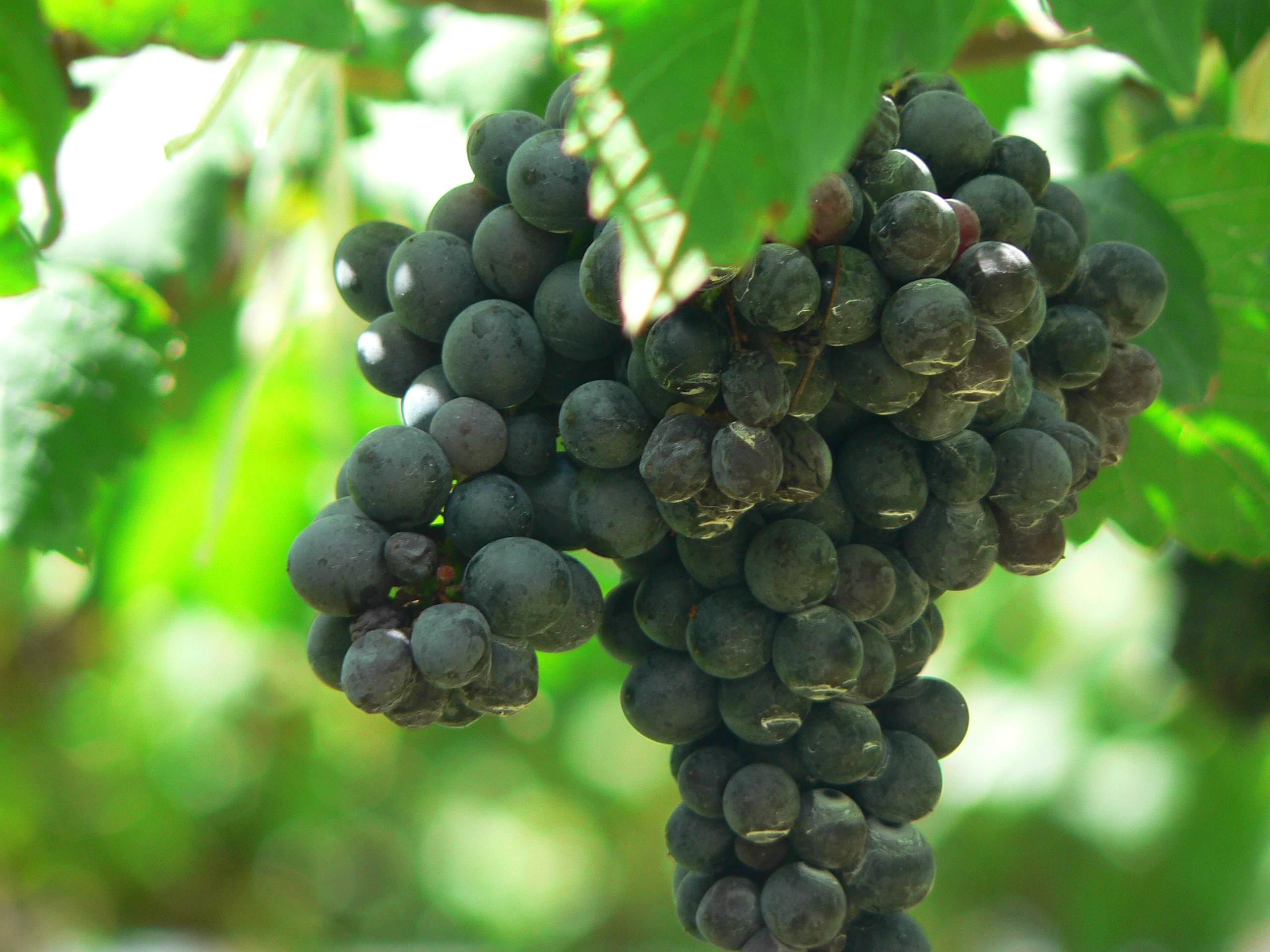
🍇 Syrah ✓
Also known as: Shiraz (Australia), HermitageAbout Syrah
Syrah is one of the world's great dark-skinned grapes, capable of producing wines that are powerful, savoury and age-worthy without losing aromatic precision. Its home is the northern Rhône, but its global spread has created a famous stylistic dialogue between classical Syrah and richer, warmer-climate Shiraz.
The important teaching point is that these are still one grape with one recognisable sensory centre: dark fruit, pepper, savoury depth and firm but usually ripe tannin. Northern Rhône examples often show more restraint, floral lift and smoked-meat savouriness, while warmer New World versions can move toward richer blackberry fruit, sweeter spice, chocolate and eucalyptus.
Syrah is also central to many Rhône and GSM blends, but in blind tasting it often announces itself clearly enough on its own. The task is to recognise both the shared Syrah core and the way climate and oak can push the wine toward either a tighter savoury profile or a broader, more opulent one.
Wine Colour & Appearance
Typical colour: Deep purple to inky black
Among the darkest red varieties. Shows intense purple-black to inky hues in youth, developing garnet and brown tones with significant age.
Colour Variations by Region
Wine Characteristics
Australian Shiraz tends to be higher in alcohol (up to 15.5%) than Syrah from other regions. Cooler climate Syrah is typically lighter in alcohol.
Aroma & Flavour Profile Le Nez du Vin Reference →
Aromas (Nose) [Le Nez aroma]
- tobacco
Flavours (Palate)
- tobacco
The Nose
On the nose, Syrah usually opens with dark berry fruit, black pepper and a savoury edge, often lifted by violet or liquorice. Cooler-climate examples tend to feel more peppery, floral and smoked-meat driven, while warmer-climate Shiraz pushes further toward richer blackberry fruit, sweeter spice, eucalyptus and more obvious oak.
The Palate
On the palate, Syrah is typically dry, full-bodied and firmly structured, with medium-high tannin and moderate acidity. The flavour profile usually combines blackberry and blueberry fruit with pepper, savoury depth and sometimes liquorice, while richer oak-shaped versions can pick up cocoa, smoke and sweeter spice without losing the grape's dark, peppery core.
Oak-driven cues usually sit in the Secondary Aromas and Secondary Flavours bands above. See Oak for a fuller explanation of how much oak matters for this grape or style.
Tannins
Oak
Old World vs New World
Understanding regional style differences helps identify origin in blind tasting.
🏰 Old World (Europe)
- Black pepper, smoked-meat and savoury notes are usually more prominent.
- Violet and olive-like complexity often show in cooler-climate examples.
- Moderate alcohol and a firmer, more restrained structure are common.
- Oak usually reads less sweet and less obvious.
🌎 New World (Americas, Australasia)
- Riper blackberry and blueberry fruit often lead, sometimes edging toward jamminess.
- Chocolate, sweeter spice and eucalyptus become more likely.
- Alcohol is often higher and the wine can feel broader and more immediate.
- Oak is often more obvious, with vanilla, toast, cocoa or coconut accents.
Key Tells for Blind Tasting
Pepper, violet and savoury smoked notes point toward Old World Syrah. Richer blackberry fruit, sweeter oak, eucalyptus and extra alcohol warmth point toward warmer New World Shiraz.
Similar Grapes & Lateral Confusion
These grapes are commonly confused with Syrah in blind tasting. Use the buttons to switch between the default teaching order and alphabetical order.
Mourvèdre
Why confused: Both can be dark, full-bodied, savoury southern reds, especially in Rhône-influenced contexts.
Malbec
Why confused: Both can be deeply coloured, full-bodied and dark-fruited.
Zinfandel/Primitivo
Why confused: Both can be full-bodied, dark-fruited and spicy, especially in warm-climate examples.
Petite Sirah
Why confused: The name overlap and very deep colour make these easy to confuse in theory.
Grenache
Why confused: Warmer-climate Grenache can also be powerful, spicy and southern in feel.
Blind Tasting Tips
Colour: Deep ruby-purple to nearly opaque, often one of the darkest wines in the flight.
Key markers: Black pepper is the signature clue. Look for dark berry fruit, a savoury smoked-meat edge, and sometimes violet or liquorice. Warmer styles may add chocolate, sweeter oak spice or eucalyptus.
Structure: Full body with medium-high tannins and moderate acidity. The tannins usually feel substantial and chewy, but not as aggressively grippy as Cabernet Sauvignon.
Common confusions: Mourvèdre (gameier and more rustic), Malbec (plummier and more violet-led), and Petite Sirah (even darker and much more tannic).
Viticulture
Grape Morphology
Winemaking Notes
Blending Partners
Adds sweetness, body, and red fruit character; softens Syrah's tannins.
Common in: Southern Rhône
Contributes structure, dark fruit, and savory notes; enhances aging potential.
Common in: Southern Rhône
Adds floral aromas, freshness, and a lighter body.
Common in: Southern Rhône
Provides color, acidity, and rustic character.
Common in: Southern Rhône
Notable Regions
Legal Classifications
Appellations and wine regions where Syrah is permitted or required:
Often blended with Grenache, Mourvèdre, and other varieties.
Includes appellations like Côte-Rôtie, Hermitage, Saint-Joseph, Crozes-Hermitage, and Cornas where Syrah is the primary (or sole) grape.
Vintage History
Notable vintages for Syrah:
Food Pairings
Parentage & Genetics
Parents: Dureza × Mondeuse Blanche
Clones
Considered a 'benchmark' clone, known for producing wines with intense color, floral aromas (violet, blackberry), and good structure. Moderate vigor.
Early ripening, high sugar accumulation, produces wines with a powerful, peppery character. Can be prone to overripening in warmer climates.
Known for producing wines with a rustic, savory character, often with notes of black olive and smoked meat. Good color and tannin structure.
Vigorous, high yielding, produces wines with good color and moderate flavor intensity. Often used for blending.
Early maturing, high yielding, produces wines with vibrant fruit flavors (plum, blackberry) and soft tannins.
Bibliography
Books and articles about Syrah:
Comprehensive overview of all major wine regions, with good coverage of Syrah/Shiraz.
Visually-oriented guide; helpful for understanding Syrah's characteristics and regions.
Provides technical details on viticulture and winemaking, relevant to understanding Syrah's production.
Detailed guide to the Northern and Southern Rhône, the heartland of Syrah.
In-depth exploration of the Northern Rhône's appellations and producers.
Price comparison, wine ratings, and information on Syrah/Shiraz wines.
Informative article on Syrah, covering characteristics, regions, and food pairings.
Professional wine education resource; search for Syrah-related articles and study materials (requires membership for full access).
Scientific research on the impact of terroir on Syrah's aroma profile.
Wines Featuring Syrah
Wines from our tasting directory that feature this grape:
Dandelion Vineyards
Barossa Valley, South Australia Château les Valentines Rouge
Château les Valentines (SCEA Pons-Massenot)
Provence Crozes-Hermitage Les trois chênes
Emmanuel Darnaud
Crozes-Hermitage, Northern Rhône Domaine de l'Espigouette Plan de Dieu
Domaine de l'Espigouette
Côtes du Rhône Villages, France