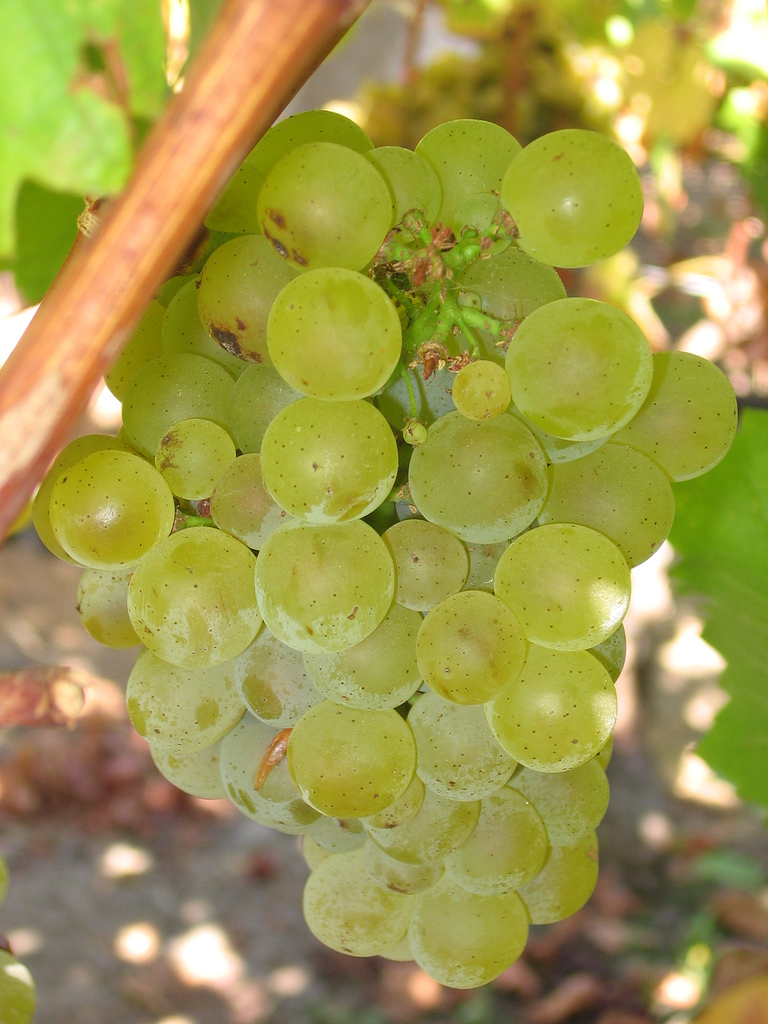
🍇 Sauvignon Blanc ✓
Also known as: Fumé BlancAbout Sauvignon Blanc
Sauvignon Blanc is one of the world's most instantly recognisable white grapes, prized for high acidity and aromatic lift. Its teaching range runs from restrained, flinty Loire examples to pungent, thiol-driven Marlborough bottles, with Bordeaux / Fumé Blanc adding a richer, oak- and lees-shaped branch.
That spread matters in blind tasting. The grape still keeps its core identity -- citrus, green fruit, herbaceous lift and freshness -- but climate and cellar choices can push it toward either taut mineral precision or louder tropical pungency.
The key is not to treat every smoky or broad Sauvignon Blanc as the same. Flinty reduction, thiolic pungency, lees texture and selective oak can all sit near one another, and the learner has to separate them carefully.
Wine Colour & Appearance
Typical colour: Pale straw with green-gold highlights
Typically pale and youthful. Shows water-white to pale straw with distinctive greenish tints. Rarely sees oak, maintaining fresh appearance.
Colour Variations by Region
Wine Characteristics
Alcohol content can vary based on region and winemaking style, with New Zealand Sauvignon Blanc sometimes lower (9-13%) and South African/Spanish styles typically in the 12.5-13.5% range.
Aroma & Flavour Profile Le Nez du Vin Reference →
Sauvignon Blanc (Loire)
Sauvignon Blanc (Marlborough & New World)
The Nose: Restrained, stony and herbal, with grapefruit and lime over elderflower, boxwood and a faint smoky-flinty edge.
The Palate: Dry, light-bodied and high in acidity, with citrus, green fruit and a taut mineral line rather than overt tropical fruit.
The Nose: More pungent and overtly aromatic, with passion fruit, grapefruit and gooseberry over tomato-leaf and boxwood lift.
The Palate: Zingy and intensely flavoured, with high acidity, juicy citrus and tropical fruit, and a piercing green-herbal freshness.
Also Important
Bordeaux / Fumé Blanc
An important third branch of Sauvignon Blanc, often fuller and more shaped by oak and/or lees than either Loire or Marlborough examples. Expect citrus and orchard fruit with smoke, wax, spice or a creamier texture, rather than the taut mineral restraint of Loire or the overt pungency of Marlborough.
Aromas (Nose) [Le Nez aroma]
- grapefruit grapefruit#02
- lime zest
Aroma profile: Loire Sauvignon Blanc is usually more restrained than pungent, led by grapefruit, lime and green apple with elderflower and a cool hedge-like boxwood note. Good examples often feel stony or lightly smoky rather than fruity-first, and any lees or mature honeyed nuance should stay subtle and finely drawn.
Aromas (Nose) [Le Nez aroma]
- grapefruit grapefruit#02
- lime
Aroma profile: Marlborough and similarly aromatic New World Sauvignon Blanc is much more overt, with punchy passion fruit, grapefruit and gooseberry, often sharpened by tomato-leaf or boxwood character. The style is usually vivid and thiol-driven rather than mineral-first, with plenty of aromatic lift and very little need for oak to make its point.
Flavours (Palate) [Le Nez aroma]
- grapefruit grapefruit#02
- lime
Palate profile: On the palate, this style is lean, dry and linear, with high acidity and flavours of grapefruit, lime and green apple. The finish often feels stony, saline or lightly smoky, and should come across as precise and refreshing rather than lush, tropical or creamy.
Flavours (Palate) [Le Nez aroma]
- grapefruit grapefruit#02
- lime
Palate profile: On the palate, this style is brisk, vivid and intensely flavoured, with high acidity and a juicy sweep of grapefruit, lime, gooseberry and tropical passion-fruit character. The finish should feel mouth-watering and sharply defined, with a green-herbal snap rather than the stonier restraint of Loire examples.
Oak-driven cues usually sit in the Secondary Aromas and Secondary Flavours bands above. See Oak for a fuller explanation of how much oak matters for this grape or style.
Oak
Old World vs New World
Understanding regional style differences helps identify origin in blind tasting.
🏰 Old World (Europe)
- More restrained citrus, green apple and mineral/flinty notes are common.
- Herbaceous character tends toward elderflower, hedge, smoke or boxwood rather than overt tropical fruit.
- Bordeaux can add lees or selective oak, but Loire usually stays taut and linear.
- Acidity feels sharp and structure precise.
🌎 New World (Americas, Australasia)
- Passion fruit, gooseberry and punchier tomato-leaf or thiolic notes are more likely.
- Fruit is more overt and immediate, especially in Marlborough.
- Oak is usually absent, though some Fumé Blanc-style wines use it selectively.
- Acidity stays high, but fruit feels louder and juicier.
Key Tells for Blind Tasting
Flinty restraint, elderflower and tight citrus point toward Old World Sauvignon Blanc. Passion fruit, gooseberry and louder pungency usually point toward Marlborough or other aromatic New World styles, while Bordeaux sits as the broader oak- and lees-capable Old World branch.
Similar Grapes & Lateral Confusion
These grapes are commonly confused with Sauvignon Blanc in blind tasting. Use the buttons to switch between the default teaching order and alphabetical order.
Albariño
Why confused: Both are high-acid aromatic whites that can look similarly pale and youthful.
Grüner Veltliner
Why confused: Both can be crisp, dry, pale and herb-tinged.
Riesling
Why confused: Both can be very pale, high in acidity and citrus-led when young.
Sémillon
Why confused: Dry Bordeaux Blanc and richer oaked white blends can blur the line between the two.
Blind Tasting Tips
Color: Pale lemon with green hues. Almost water-white when young.
Key markers: Look for grapefruit, lime, green fruit and herbaceous lift. Loire examples are more flinty and restrained; Marlborough pushes toward passion fruit, gooseberry and tomato leaf; Bordeaux / Fumé Blanc can add more breadth, lees and selective oak.
Structure: Usually dry, light- to medium-bodied and high in acidity. Even broader styles should still feel bright and mouth-watering.
Common confusions: Albariño (more saline and stone-fruit led), Grüner Veltliner (white pepper), Riesling (less herbaceous, more lime/slate), and Sémillon (waxier, less lifted).
Viticulture
Grape Morphology
Winemaking Notes
Blending Partners
Creates dry whites and sweet wines; complements Sauvignon Blanc's acidity
Common in: Bordeaux, Sauternes
Notable Regions
Legal Classifications
Appellations and wine regions where Sauvignon Blanc is permitted or required:
Almost always 100% Sauvignon Blanc.
Typically 100% Sauvignon Blanc.
Sauvignon Blanc is a key variety in many Loire Valley wines.
Cloudy Bay is a well-known example; Sauvignon Blanc is highly prominent.
Sauvignon Blanc is grown in California AVAs.
Sauvignon Blanc is grown in Washington State AVAs.
Vintage History
Notable vintages for Sauvignon Blanc:
Food Pairings
Parentage & Genetics
Parents: Cabernet Franc × Unknown
Clones
Early budding and ripening, known for producing wines with intense aromas.
One of the 20 approved French clones (Sauvignon B), known for good vigor.
Another of the 20 approved French clones (Sauvignon B), often used for blending.
Approved French clone (Sauvignon B), characteristics not widely detailed.
Approved French clone (Sauvignon B), characteristics not widely detailed.
Approved French clone (Sauvignon B), characteristics not widely detailed.
Approved French clone (Sauvignon B), characteristics not widely detailed.
Approved French clone (Sauvignon B), characteristics not widely detailed.
A color mutation of Sauvignon Blanc, often produces wines with a fuller body and different aromatic profile.
Bibliography
Books and articles about Sauvignon Blanc:
Comprehensive overview of winemaking, with sections relevant to white wine varieties like Sauvignon Blanc, including aroma compounds and vineyard management.
Visually engaging guide with a section on Sauvignon Blanc, covering flavor profiles, regions, and food pairings.
The definitive reference work on wine. Extensive entries on Sauvignon Blanc, its history, viticulture, and winemaking.
Classic study on the impact of terroir on Sauvignon Blanc aroma compounds, particularly methoxypyrazines.
Research into the formation of thiols, key aroma compounds in Sauvignon Blanc, and their precursors in grapes.
Comprehensive information on Sauvignon Blanc, including regional profiles, price data, and tasting notes.
Accessible guide to Sauvignon Blanc, covering flavor profiles, regions, and food pairings.
Includes a detailed section on the Italian biotypes of Sauvignon Blanc (known as Friulano) and its history in the region.
Examines how sunlight exposure affects the development of aroma compounds in Sauvignon Blanc grapes.
User-driven wine ratings and reviews, with a focus on Sauvignon Blanc. Provides a broad overview of styles and regions.